Ph.D. student · Rensselaer Polytechnic Institute

A F M Saif

Machine learning researcher working on LLM post-training, reinforcement learning, and agentic AI.

I study what happens to large models after pre-training: how to improve them with supervised fine-tuning and reinforcement learning, how to adapt them cheaply to new languages and tasks, and how to combine specialized models without losing what each one learned.

My current work looks at agents that learn from their own experience. Not every retrieved memory helps, and some make an agent worse, so I work on deciding which experiences to keep and how to keep shared memory safe. Earlier, I used bilevel and multi-objective optimization to balance competing objectives in multilingual speech and foundation models.

I enjoy both the math and the training loop. At IBM Research in summer 2026, I built SFT and GRPO pipelines for 8–9B-parameter models from scratch in PyTorch.

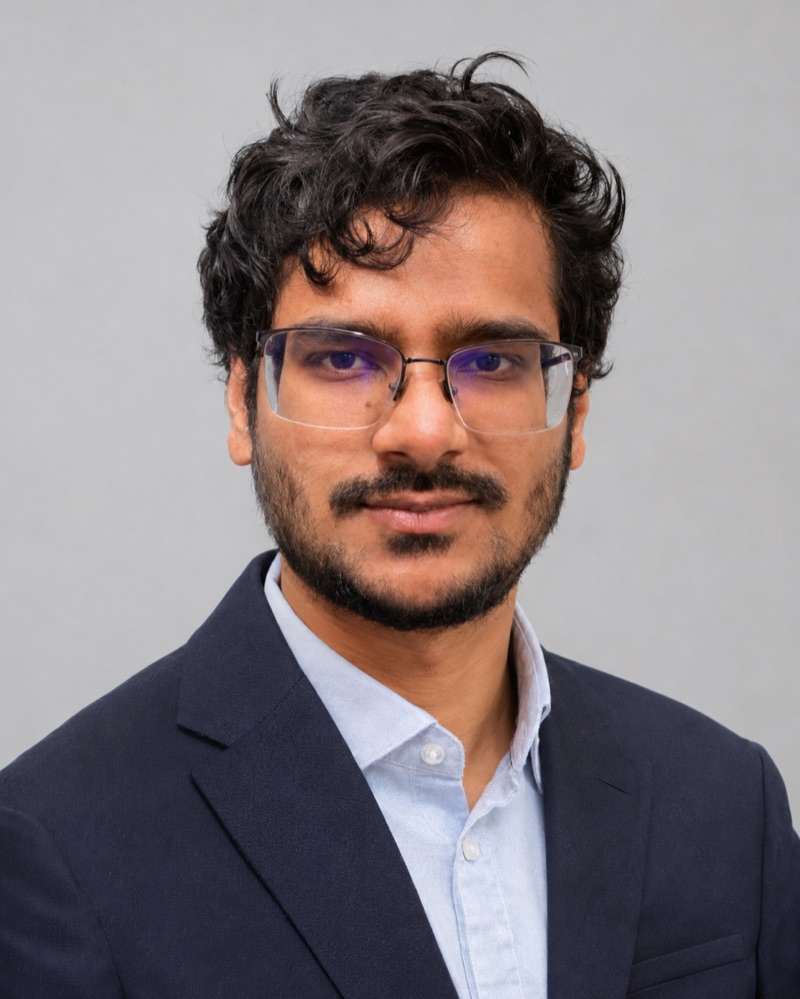
Portrait of A F M Saif wearing glasses, a navy blazer, and a light blue shirt, against a plain gray background.
Troy, New York
Now
LLM post-training, RL, and alignment research at RPI
Summer 2026
Research Extern, LLM Post-Training, IBM Research
Recent papers
Interspeech 2026 · ICASSP 2026 · NeurIPS 2025

Research

Four connected threads, from how models are trained to how they are adapted and evaluated.

Post-training and reinforcement learning for LLMs

Improving a model after pre-training requires control of the whole loop: data, rollouts, rewards, memory limits, and evaluation. I write that loop myself rather than relying on off-the-shelf trainers, which makes failures easier to diagnose.

At IBM Research I reproduced post-training pipelines for Llama-3.1-8B and Gemma-2-9B, implemented SFT and GRPO for mathematical reasoning (rollout generation, group-relative advantages, and KL regularization to a reference policy), and trained with FSDP and DeepSpeed on multi-GPU nodes. I also evaluated model-merging methods, including Task Arithmetic, TIES, DARE, Fisher merging, RegMean, and Localize-and-Stitch, and sparse parameter adaptation for combining independently post-trained models with less cross-task interference.

Context Industry research, IBM Research, summer 2026

Agentic AI: experience selection and memory safety

Agents can improve without weight updates by reusing experience from earlier tasks. But some retrieved experiences help, some hurt, and bad memories can spread when memory is shared.

I build training-free GRPO pipelines that optimize an external experience library with verifier-based rewards, evaluated on HumanEval, AIME, and HotpotQA with Qwen2.5 and DeepSeek-R1-Distill models. To decide which experiences to keep, I use credit-assignment methods such as Shapley values, cardinality-restricted Shapley values, greedy selection, retrieval, and LLM-as-a-judge. I also study harmful-memory propagation and the robustness of agents that read from external or shared memory.

Related Harmful memories in agentic LLMs (preprint) Research code: Shapley-guided experience refinement

Efficient adaptation of foundation models

Fully fine-tuning a multi-billion-parameter model for every language or task is expensive and causes interference. I work on adaptation methods that train a small number of parameters and route inputs to the right ones.

BELLA connects a speech encoder to a Qwen2.5-7B decoder through a Q-Former bridge and adds mixture-of-experts LoRA with task-specific and shared experts. It trains roughly 72M parameters. Routing and adaptation are learned jointly as a bilevel problem with DeepSpeed ZeRO-2 on 8×A100 GPUs, and decoding combines candidate generation with LLM-based rescoring.

Related BELLA, Interspeech 2026 Heterogeneous SSL pre-training, ICASSP 2026

Bilevel and multi-objective optimization for learning

Most training involves more than one objective. Self-supervised and supervised losses pull in different directions, languages and tasks compete for capacity, users prefer particular trade-offs, and hyperparameters sit inside the training process itself. I treat these as structured optimization problems rather than loss weights to hand-tune.

With collaborators, I replaced the usual pre-train-then-fine-tune pipeline with joint bilevel training for speech recognition, used conflict-aware multi-objective optimization to train one model for recognition and translation across languages, and helped develop methods for preference-guided multi-objective learning and for gradient-based hyperparameter tuning in diffusion models.

Related Objective Soups, NeurIPS 2025 Generative bilevel optimization, ICML 2025 FERERO, NeurIPS 2024 M²ASR, Interspeech 2024 BL-JUST, ICASSP 2024
Publications

Newest first. See Google Scholar for the complete and current record.

2026

  1. Interspeech 2026

    BELLA: Efficient Bilevel Learning with LoRA for Multilingual ASR

    A F M Saif, Xiaodong Cui, Brian Kingsbury, Tianyi Chen

    Annual Conference of the International Speech Communication Association (Interspeech)

    Connects a pretrained speech encoder to an LLM decoder with mixture-of-experts LoRA modules, learning routing and adaptation jointly as a bilevel problem to reduce cross-language interference.

  2. ICASSP 2026

    Heterogeneous Self-Supervised Acoustic Pre-Training with Local Constraints

    Xiaodong Cui, A F M Saif, Brian Kingsbury, Tianyi Chen

    IEEE International Conference on Acoustics, Speech and Signal Processing (ICASSP)

    Adds per-source constraints to self-supervised pre-training on heterogeneous data, formulated as a bilevel problem so that a low average loss does not hide poorly served data sources.

2025

  1. NeurIPS 2025

    Objective Soups: Multilingual Multi-Task Modeling for Speech Processing

    A F M Saif, Lisha Chen, Xiaodong Cui, Songtao Lu, Brian Kingsbury, Tianyi Chen

    Advances in Neural Information Processing Systems (NeurIPS)

    Compares multi-objective formulations for training one model on recognition and translation across languages, and finds that a bilevel recipe separating recognition and translation outperforms flat optimization.

  2. ICML 2025

    A First-order Generative Bilevel Optimization Framework for Diffusion Models

    Quan Xiao, Hui Yuan, A F M Saif, Gaowen Liu, Ramana Kompella, Mengdi Wang, Tianyi Chen

    International Conference on Machine Learning (ICML), PMLR 267

    Treats diffusion hyperparameters such as entropy strength and noise schedules as upper-level variables, enabling gradient-based tuning during fine-tuning and pre-training.

2024

  1. NeurIPS 2024

    FERERO: A Flexible Framework for Preference-Guided Multi-Objective Learning

    Lisha Chen, A F M Saif, Yanning Shen, Tianyi Chen

    Advances in Neural Information Processing Systems (NeurIPS) 37

    Casts preference-guided multi-objective learning as constrained vector optimization, giving a single framework for steering models toward a desired trade-off between objectives.

  2. IEEE/ACM TASLP 2024

    Bilevel Joint Unsupervised and Supervised Training for Automatic Speech Recognition

    Xiaodong Cui, A F M Saif, Songtao Lu, Lisha Chen, Tianyi Chen, Brian Kingsbury, George Saon

    IEEE/ACM Transactions on Audio, Speech, and Language Processing, vol. 33

    Journal extension of bilevel joint training, which couples self-supervised and supervised objectives instead of running them as separate pre-training and fine-tuning stages.

  3. Interspeech 2024

    M²ASR: Multilingual Multi-Task Automatic Speech Recognition via Multi-Objective Optimization

    A F M Saif, Lisha Chen, Xiaodong Cui, Songtao Lu, Brian Kingsbury, Tianyi Chen

    Proc. Interspeech 2024, pp. 1240–1244

    Formulates multilingual multi-task ASR as constrained multi-objective optimization, with speech-to-text translation as an auxiliary supervised objective, to avoid conflicts between languages and tasks.

  4. ICASSP 2024

    Joint Unsupervised and Supervised Training for Automatic Speech Recognition via Bilevel Optimization

    A F M Saif, Xiaodong Cui, Han Shen, Songtao Lu, Brian Kingsbury, Tianyi Chen

    IEEE International Conference on Acoustics, Speech and Signal Processing (ICASSP)

    Introduces BL-JUST, which places an unsupervised loss at the lower level and a supervised loss at the upper level, replacing the usual pre-train-then-fine-tune pipeline.

Preprints

  1. Preprint

    Experience Is Not Always the Best Teacher: Identifying Harmful Memories in Agentic LLMs

    Studies when retrieved experiences help or degrade LLM agents, and how to identify the memories that hurt downstream performance.

Earlier work in medical imaging and assistive technology, 2019–2021 (4)
  1. IEEE TAI 2021

    CapsCovNet: A Modified Capsule Network to Diagnose COVID-19 From Multimodal Medical Imaging

    A F M Saif, Tamjid Imtiaz, Shahriar Rifat, Celia Shahnaz, Wei-Ping Zhu, M. Omair Ahmad

  2. IEEE Access 2021

    Exploiting Cascaded Ensemble of Features for the Detection of Tuberculosis Using Chest Radiographs

    A F M Saif, Tamjid Imtiaz, Celia Shahnaz, Wei-Ping Zhu, M. Omair Ahmad

  3. IEEE R10-HTC 2019

    Eye Gaze Controlled Immersive Video Navigation System for Disabled People

    Dipayan Saha, A. Q. M. Sazzad Sayyed, A F M Saif, Celia Shahnaz, Shaikh Anowarul Fattah

  4. IEEE Access 2019

    Abnormality Detection in Musculoskeletal Radiographs Using Capsule Network

    A F M Saif, Celia Shahnaz, Wei-Ping Zhu, M. Omair Ahmad

Experience

Industry and academic research. The full details are in the CV.

  1. Summer 2026

    Research Extern, LLM Post-Training

    IBM Research · Yorktown Heights, NY

    • Reproduced LLM post-training pipelines for Llama-3.1-8B and Gemma-2-9B with training loops written directly in PyTorch, and validated task-specialized models against reported results on math, coding, multilingual, instruction-following, and safety benchmarks.
    • Implemented SFT and gradient-based GRPO for mathematical reasoning on NuminaMath-TIR (72K examples).
    • Trained 8–9B-parameter models on 4×A100 GPUs, using FSDP sharding and DeepSpeed to stay within memory, with end-to-end preprocessing, checkpointing, inference, and evaluation workflows.
    • Diagnosed NaN losses caused by long prompts whose truncation removed every supervised target token, and filtered the affected examples to restore stable training.
    • Implemented and compared model-merging methods and studied sparse adaptation to reduce cross-task interference.
  2. 2026 – present

    Researcher, LLM Post-Training, RL, and Alignment

    Rensselaer Polytechnic Institute · Troy, NY

    • Built training-free GRPO pipelines that optimize an external experience library with group-relative advantages and verifier-based rewards.
    • Developed experience-selection and credit-assignment methods to separate experiences that help downstream performance from those that degrade it.
    • Investigating agentic AI alignment and memory safety, including harmful-memory propagation.
  3. 2025 – 2026

    Researcher, Parameter-Efficient LLM Adaptation

    Rensselaer Polytechnic Institute / IBM Research · Troy, NY

    • Developed BELLA, combining a speech encoder, Q-Former bridge, and Qwen2.5-7B decoder for multilingual speech recognition.
    • Designed mixture-of-experts LoRA with task-specific and shared experts, adapting the LLM with roughly 72M trainable parameters.
    • Trained with DeepSpeed ZeRO-2 across 8×A100 GPUs and built decoding pipelines with LLM-based rescoring.
  4. 2023 – 2025

    Graduate Research Assistant, Foundation Models and Optimization

    Rensselaer Polytechnic Institute · Troy, NY

    • Developed bilevel and conflict-aware multi-objective training methods for large pretrained speech models, leading to papers at ICASSP, TASLP, Interspeech, and NeurIPS and two IBM–RPI patent applications.
    • Contributed to optimization methods for diffusion models (ICML 2025) and preference-guided multi-objective learning (NeurIPS 2024).

Methods and tools

Post-training
SFT, GRPO, reward design, model merging, LoRA / PEFT, mixture-of-experts
Systems
Distributed multi-GPU training, FSDP, DeepSpeed ZeRO, checkpointing, CUDA, Slurm, Linux
Frameworks
PyTorch (custom training loops), Hugging Face Transformers, Weights & Biases, NumPy, SciPy
Evaluation
Math reasoning, code generation, multilingual, instruction-following, and safety benchmarks; LLM-as-a-judge
Optimization
Bilevel, multi-objective, stochastic, and nonconvex optimization

Background

Education, patent applications, and service.

Education

  1. Ph.D., Electrical, Computer, and Systems Engineering In progress

    Rensselaer Polytechnic Institute · 2023 – present

    Focus: machine learning, large language models, and optimization

  2. M.S., Electrical, Computer, and Systems Engineering

    Rensselaer Polytechnic Institute · 2023 – 2025

  3. B.Sc., Electrical and Electronic Engineering

    Bangladesh University of Engineering and Technology (BUET), Dhaka · 2013 – 2018

Patent applications

  1. Joint Unsupervised and Supervised Training for Automatic Speech Recognition Application

    X. Cui, A F M Saif, T. Chen · U.S. Patent Application No. 19/293,954

  2. A Method for Multilingual Multi-task Acoustic Modeling Based on Conflict-Avoidance Multi-objective Optimization Application

    X. Cui, A F M Saif, L. Chen, S. Lu, T. Chen, B. Kingsbury · U.S. Patent Application No. 18/731,228

Both are patent applications, not granted patents. They are jointly owned by IBM and Rensselaer Polytechnic Institute.

Reviewing

NeurIPS; IEEE Transactions on Signal Processing; IEEE Signal Processing Letters; IEEE Journal of Selected Topics in Signal Processing; IEEE Journal of Biomedical and Health Informatics; IEEE Access; Asilomar Conference on Signals, Systems, and Computers; IEEE Sensor Array and Multichannel Signal Processing Workshop (SAM).

Contact

I’m open to research scientist and research engineer roles and to research collaborations on LLM post-training, reinforcement learning, and agentic AI. Email is the best way to reach me.

afmsaif927@gmail.com